
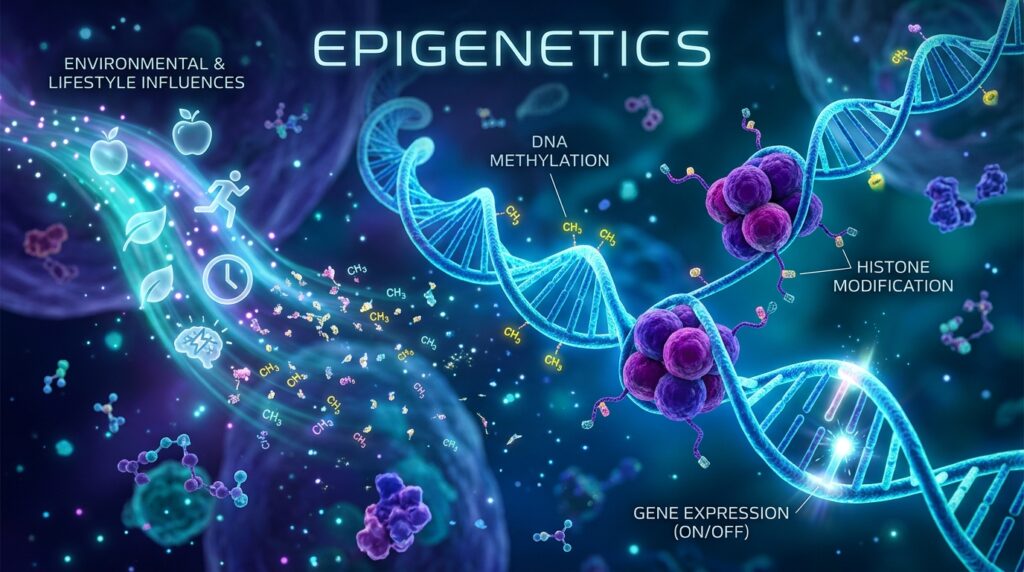

The human body is an extraordinary biological system, shaped by millions of complex interactions between genes, cells, environmental conditions, and everyday experiences. For many years, scientists primarily focused on DNA to understand why people develop particular characteristics, how diseases occur, and why individuals respond differently to their surroundings. However, modern biological research has revealed another important part of this picture: epigenetics.
The term epigenetický relates to epigenetics, a scientific field that explores how gene activity can change without modifying the underlying DNA sequence. It provides valuable insight into how environmental influences, nutrition, physical activity, aging, and other factors interact with genetic information.
Unlike traditional genetic mutations, epigenetic changes generally influence how cells interpret and use existing genetic instructions. They can determine whether particular genes become more active, less active, or temporarily switched off.
Understanding epigenetický processes is important because they connect genetics with human development, cellular function, environmental exposure, and health. Researchers are increasingly investigating these mechanisms to understand diseases, biological aging, and the relationship between lifestyle and gene regulation.
This article explores the meaning of epigenetický, the science behind epigenetics, its major mechanisms, environmental influences, potential health implications, and its growing importance in modern medicine.
What Does Epigenetický Mean?
Epigenetický is a Czech adjective associated with the scientific concept of epigenetics. In English, the corresponding adjective is epigenetic.
Epigenetics refers to the study of biological mechanisms that influence gene activity without changing the actual sequence of DNA. These mechanisms help determine which genes are active in particular cells, when they become active, and how strongly they are expressed.
To understand this concept, it helps to distinguish between two important biological terms:
Genetics: The study of genes, DNA sequences, heredity, and inherited biological characteristics.
Epigenetics: The study of chemical and structural modifications that influence how genetic information is used.
Imagine DNA as a detailed instruction manual. Genetics determines the instructions contained in the manual, while epigenetics helps regulate which instructions are accessed and followed.
This distinction explains why different cells in the human body can perform completely different functions despite containing almost identical genetic information.
For example, brain cells, skin cells, and muscle cells generally contain the same DNA. However, they activate different groups of genes to perform their specialized functions.
Epigenetic regulation helps make this cellular specialization possible.
According to the National Human Genome Research Institute, epigenetic modifications influence how genes are switched on and off without changing the underlying DNA sequence.
Understanding the Relationship Between Genetics and Epigenetics
Genetics and epigenetics are closely connected, but they describe different aspects of biological information.
Your genome contains the complete collection of genetic instructions within your cells. Your epigenome consists of chemical modifications and associated molecular structures that help regulate how those instructions are used.
Both systems contribute to development, cellular activity, and individual characteristics.
Genetic information provides the foundation for biological functions, while epigenetic mechanisms help cells respond to developmental signals and environmental conditions.
For example, two individuals may share similar genetic variations but experience different biological outcomes because their environmental exposures, developmental histories, and epigenetic patterns differ.
Identical twins provide an interesting example. Although they begin with nearly identical DNA sequences, differences in their environments and life experiences can contribute to differences in their epigenetic patterns over time.
This relationship demonstrates that biological characteristics are influenced by more than genetic inheritance alone.
How Does Epigenetics Work?
Epigenetics operates through several molecular mechanisms that influence DNA accessibility and gene expression.
These processes occur inside cells and involve specialized proteins, enzymes, and chemical modifications.
The three major mechanisms commonly discussed in epigenetic research are DNA methylation, histone modification, and non-coding RNA regulation.
1. DNA Methylation
DNA methylation is one of the best-studied epigenetic mechanisms.
It involves attaching small chemical groups called methyl groups to particular locations on DNA. These modifications can influence whether specific genes are expressed.
In many situations, increased DNA methylation near a gene’s regulatory region is associated with reduced gene activity.
However, the relationship is more complex than a simple on-and-off switch. The effect depends on where methylation occurs and the surrounding molecular environment.
DNA methylation plays important roles in:
- Normal embryonic development.
- Cellular specialization.
- Regulation of gene expression.
- Genomic stability.
- Genomic imprinting.
- Certain disease processes.
Scientists study DNA methylation patterns to better understand how cells develop and how abnormal gene regulation may contribute to disease.
2. Histone Modification
DNA molecules are extremely long and must be organized inside the nucleus of each cell.
They achieve this organization by wrapping around specialized proteins called histones. Together, DNA and associated proteins form chromatin.
Histones can receive different chemical modifications that influence how tightly DNA is packaged.
When chromatin becomes more accessible, cellular machinery can more easily reach certain genes. When chromatin becomes less accessible, gene activity may decrease.
Common histone modifications include:
- Histone acetylation.
- Histone methylation.
- Histone phosphorylation.
- Histone ubiquitination.
Histone acetylation is frequently associated with more accessible chromatin and increased gene transcription, although its effects depend on the specific location and biological context.
Histone methylation can either increase or decrease gene activity depending on which histone residue is modified.
These mechanisms help cells regulate their genetic instructions in a controlled and organized manner.
3. Non-Coding RNA Regulation
Not all RNA molecules are responsible for producing proteins.
Some RNA molecules, known as non-coding RNAs, participate in gene regulation.
MicroRNAs and long non-coding RNAs can influence gene expression by interacting with RNA molecules, proteins, and chromatin-regulating systems.
For example, microRNAs can reduce the production of particular proteins by influencing the stability or translation of messenger RNA.
Long non-coding RNAs may also help recruit proteins that modify chromatin and regulate gene activity.
Although these processes involve different molecular pathways, they contribute to the broader epigenetic regulation of cellular functions.
What Factors Influence Epigenetic Changes?
One of the most interesting aspects of epigenetics is its relationship with the environment.
Although DNA provides inherited biological instructions, cells continuously respond to internal and external signals.
These signals can influence epigenetic patterns throughout a person’s lifetime.
Several factors are particularly important.
1. Nutrition and Dietary Habits
Nutrition provides the body with essential nutrients required for cellular maintenance, growth, and normal metabolism.
Some nutrients participate in biochemical pathways involved in DNA methylation and other epigenetic processes.
For example, folate, vitamin B12, choline, and methionine contribute to one-carbon metabolism, which supports the production and availability of methyl groups.
A balanced diet containing vegetables, fruits, whole grains, legumes, and appropriate sources of protein supports overall health.
However, it is important to understand that no individual food can reliably switch on beneficial genes or reverse every harmful epigenetic change.
The relationship between nutrition and epigenetics remains an active area of scientific investigation.
2. Physical Activity
Regular physical activity influences several biological systems, including metabolism, inflammation, cardiovascular function, and muscle development.
Research suggests that exercise can also be associated with changes in DNA methylation and other epigenetic markers.
These changes may contribute to the body’s ability to adapt to repeated physical activity.
Different types of exercise, including aerobic training and resistance training, produce different biological responses.
The relationship between physical activity and epigenetic regulation is complex, and scientists continue to investigate its long-term significance.
3. Psychological Stress
Stress activates several physiological systems that help the body respond to challenging situations.
Short-term stress responses are generally part of normal human biology. However, prolonged or severe stress may influence hormonal activity, immune function, and other biological processes.
Researchers have investigated associations between psychological stress and epigenetic modifications, particularly in genes involved in stress regulation.
Some studies suggest that early-life experiences may be associated with lasting changes in biological regulation.
Nevertheless, identifying a direct causal relationship between a particular stressful experience and a specific epigenetic outcome in humans can be difficult.
4. Environmental Pollution
Environmental exposures are another important area of epigenetic research.
Air pollution, tobacco smoke, certain industrial chemicals, and other environmental contaminants may influence molecular pathways involved in gene regulation.
Exposure to harmful substances can affect cellular processes and may contribute to changes in DNA methylation and other epigenetic markers.
Researchers investigate these relationships to better understand how environmental conditions influence health over time.
Reducing exposure to tobacco smoke, improving air quality, and following appropriate environmental safety practices can support general health.
5. Aging
Aging is accompanied by numerous biological changes, including alterations in gene expression and epigenetic regulation.
Scientists have observed that DNA methylation patterns can change throughout a person’s lifetime.
Some research has identified age-associated methylation patterns that can be used to estimate aspects of biological aging.
These patterns are sometimes described as epigenetic clocks.
Although such tools are scientifically promising, they should not be interpreted as perfect measurements of an individual’s health, lifespan, or future disease risk.
Epigenetics and Human Health
Epigenetic regulation is essential for normal development and cellular function. However, abnormal epigenetic patterns may contribute to certain health conditions.
Researchers are studying the relationship between epigenetic changes and several major disease categories.
Epigenetics and Cancer
Cancer is one of the most extensively studied areas of epigenetic research.
Cancer development involves changes in cellular processes that regulate growth, survival, DNA repair, and other essential functions.
These changes may involve genetic mutations, epigenetic abnormalities, or combinations of both.
For example, abnormal DNA methylation can reduce the activity of certain tumor-suppressor genes. Other epigenetic changes may influence genes involved in cell growth and division.
Understanding these mechanisms has helped scientists identify potential biomarkers and develop treatments that target specific epigenetic processes.
Epigenetic therapies are already used in certain cancer treatments, although their effectiveness depends on the cancer type and individual clinical circumstances.
Epigenetics and Metabolic Health
Metabolic health involves how the body processes energy, regulates blood sugar, and manages fats and other nutrients.
Epigenetic mechanisms influence the expression of genes involved in these processes.
Researchers have investigated epigenetic patterns associated with obesity, insulin resistance, and type 2 diabetes.
Nutrition, physical activity, environmental exposures, and inherited genetic factors may all contribute to these relationships.
Understanding epigenetic regulation could eventually help researchers identify additional biological pathways involved in metabolic disorders.
Epigenetics and Brain Function
The brain is a highly complex organ that requires precise regulation of gene expression.
Epigenetic mechanisms contribute to brain development, neuronal specialization, memory formation, and responses to environmental experiences.
Scientists are also investigating associations between epigenetic modifications and neurological or psychiatric conditions.
However, these relationships are complicated, and epigenetic findings should not be interpreted as simple explanations for individual mental or neurological health conditions.
Epigenetics and Immune Function
The immune system relies on different types of specialized cells that must respond appropriately to infections and other biological challenges.
Epigenetic regulation helps control the development and activity of immune cells.
It also influences how immune cells respond to inflammatory signals and environmental conditions.
Disruptions in these regulatory mechanisms may contribute to abnormal immune responses and inflammatory diseases.
What Is Epigenetic Inheritance?
Epigenetic inheritance describes the transmission of certain epigenetic patterns from one cell generation to another or, in some circumstances, from parents to offspring.
There are two important forms to understand.
Cellular epigenetic inheritance
When a cell divides, some epigenetic information can be maintained in its daughter cells.
This process helps preserve cellular identity.
For example, a muscle cell generally continues to maintain the molecular characteristics needed to function as a muscle cell when it divides.
Intergenerational and transgenerational inheritance
Some epigenetic information may also be transmitted through reproductive cells.
However, the situation is more complicated in mammals because many epigenetic marks are reset during the development of reproductive cells and early embryos.
Scientists continue to investigate which epigenetic modifications can escape this reprogramming and whether they produce lasting effects across generations.
It is therefore important not to assume that every lifestyle-related epigenetic change can be passed directly from parents to children.
The evidence for transgenerational epigenetic inheritance is stronger in some experimental organisms than it is in humans.
Can Epigenetic Changes Be Reversed?
Many epigenetic modifications are dynamic and can be added, removed, or modified through cellular processes.
This flexibility allows cells to respond to developmental signals and changing environmental conditions.
For example, DNA methylation can be modified through processes involving methylation and demethylation.
Histone modifications can also be added or removed by specialized enzymes.
However, the fact that certain epigenetic modifications are reversible does not mean that every epigenetic change can be easily corrected.
Some modifications may remain stable for long periods, while others change more frequently.
The outcome depends on the biological process, tissue type, environmental exposure, and underlying molecular mechanisms.
Researchers are exploring ways to influence abnormal epigenetic regulation, particularly in diseases such as cancer.
Can Lifestyle Choices Affect Epigenetics?
Lifestyle and environmental conditions are associated with changes in epigenetic regulation.
This does not mean people can precisely control their genes through everyday habits. Instead, it highlights the relationship between biological systems and the environments in which people live.
Several healthy practices support normal physiological function and may influence epigenetic processes.
Maintain a Balanced Diet
Choose a varied diet containing vegetables, fruits, whole grains, legumes, nuts, and suitable protein sources.
Adequate nutrient intake supports normal cellular metabolism and biochemical pathways involved in gene regulation.
Exercise Regularly
Regular movement supports cardiovascular health, metabolic function, muscle strength, and overall well-being.
Exercise also provides biological signals that can influence gene expression and epigenetic regulation.
Prioritize Quality Sleep
Sleep supports immune function, metabolic regulation, memory, and normal hormonal activity.
Although researchers continue to explore the relationship between sleep and epigenetics, maintaining a consistent sleep routine is beneficial for overall health.
Reduce Harmful Environmental Exposures
Avoiding tobacco products, limiting exposure to harmful chemicals, and following appropriate workplace and environmental safety recommendations can reduce preventable health risks.
Manage Long-Term Stress
Healthy stress-management practices may include regular exercise, relaxation techniques, social support, and maintaining a balanced daily routine.
These approaches support general well-being without promising specific epigenetic outcomes.
Epigenetics in Modern Medicine
Epigenetics has become an important area of modern biomedical research.
Scientists are investigating how epigenetic information can contribute to disease detection, treatment development, and personalized medicine.
Several applications are particularly promising.
Epigenetic Biomarkers
Biomarkers are measurable biological indicators that provide information about physiological processes or disease.
Certain epigenetic patterns may help researchers distinguish between healthy and diseased tissues.
DNA methylation markers are already being investigated and used in selected clinical applications.
Their usefulness depends on the specific disease, testing method, and clinical setting.
Epigenetic-Based Treatments
Some medications are designed to influence enzymes responsible for adding or removing epigenetic modifications.
These treatments can help restore aspects of normal gene regulation in certain diseases.
For example, drugs targeting DNA methylation and histone deacetylation pathways are used in specific cancer treatments.
Such medicines require professional medical supervision because changing gene regulation can affect multiple cellular processes.
Personalized Medicine
Personalized medicine aims to adapt healthcare decisions to an individual’s biological characteristics and medical circumstances.
Epigenetic information may eventually contribute to a more detailed understanding of disease development and treatment responses.
Combining genetic information, epigenetic markers, environmental history, and clinical data could provide additional insights into individual health.
However, widespread use of epigenetic profiling for routine personalized healthcare still requires further validation.
Epigenetics vs. Genetics: Understanding the Differences
Although genetics and epigenetics work together, their primary functions are different.
| Feature | Genetics | Epigenetics |
|---|---|---|
| Main focus | DNA sequence | Regulation of gene activity |
| Biological information | Genetic code | Chemical and structural marks |
| DNA sequence | Can change through mutations | Generally remains unchanged |
| Environmental influence | Can contribute to mutations | Can influence epigenetic patterns |
| Inheritance | Commonly passed through DNA | Some marks may be inherited |
| Main mechanisms | DNA replication and genetic variation | DNA methylation and histone modification |
Both fields are necessary for understanding how biological characteristics develop and how cells function.
Neither genetics nor epigenetics alone explains every aspect of human health.
Common Misconceptions About Epigenetics
As epigenetics becomes more popular, misunderstandings about its scientific meaning are also becoming common.
Here are several misconceptions worth correcting.
Misconception 1: Epigenetics changes your DNA sequence.
Epigenetic modifications generally influence how DNA is used without changing its underlying sequence.
Misconception 2: You can control every gene through lifestyle choices.
Lifestyle factors can influence biological processes, but individuals cannot precisely control which genes become active or inactive.
Misconception 3: All epigenetic changes are inherited.
Many epigenetic modifications are maintained within cells, while others are reset during reproduction. Only certain modifications may be transmitted between generations.
Misconception 4: Epigenetics provides a guaranteed way to prevent disease.
Epigenetic research helps explain some biological pathways associated with disease. It does not guarantee prevention, treatment, or recovery.
Misconception 5: Epigenetic tests reveal your exact biological age.
Some tests estimate age-related biological patterns, but their results depend on the testing method and should not be treated as definitive predictions of lifespan.
The Future of Epigenetic Research
Epigenetics continues to develop as scientists improve their understanding of how DNA, chromatin, environmental conditions, and cellular processes interact.
New research technologies are helping scientists investigate epigenetic modifications at increasingly detailed levels.
Single-cell epigenomics, advanced sequencing techniques, and improved molecular analysis methods are expanding knowledge about differences between individual cells.
These technologies may help researchers understand why certain cells respond differently to environmental signals and how abnormal gene regulation contributes to disease.
Another important research area involves epigenetic editing.
Unlike traditional genetic editing, which changes DNA sequences, epigenetic editing aims to modify gene activity without permanently altering the underlying genetic code.
Although this approach remains an evolving field, it may eventually contribute to new treatment strategies for selected conditions.
Researchers are also studying the relationship between epigenetic aging, environmental exposures, and long-term health.
As evidence grows, epigenetics may become increasingly important in cancer research, developmental biology, environmental health, and precision medicine.
Why Understanding Epigenetický Is Important
The concept of epigenetický provides a broader understanding of how human biology works.
It demonstrates that genetic information is not used in a completely fixed or identical way throughout life.
Instead, cells continuously regulate gene activity according to developmental requirements, internal signals, and environmental conditions.
This perspective helps explain several important biological questions:
- Why do different cells have different functions despite sharing similar DNA?
- How can environmental conditions influence gene expression?
- Why do epigenetic patterns change during aging?
- How can abnormal gene regulation contribute to disease?
- What role might epigenetic modifications play in cellular memory and inheritance?
By studying these questions, scientists can better understand the relationship between inherited biological information and environmental influences.
The growing importance of epigenetics also highlights the value of continued research, scientific accuracy, and evidence-based healthcare.
Conclusion
Epigenetický is a term connected to one of the most fascinating areas of modern biological science. Epigenetics explains how cells regulate genetic information without necessarily changing the underlying DNA sequence.
Through mechanisms such as DNA methylation, histone modification, and non-coding RNA regulation, cells control gene expression and maintain their specialized functions.
Environmental influences, nutrition, physical activity, stress, and aging may all be associated with changes in epigenetic regulation.
These processes are important for normal development and may also contribute to the development of certain diseases.
Although scientists have made significant progress, many questions remain unanswered, particularly regarding human transgenerational inheritance and the long-term health effects of specific epigenetic changes.
As research advances, epigenetics is expected to provide further insights into molecular biology, disease mechanisms, and personalized medicine.
Ultimately, understanding epigenetický helps us appreciate an essential principle of human biology: our genes provide the instructions, but complex regulatory systems determine how those instructions are used.
Frequently Asked Questions (FAQs)
1. What does epigenetický mean?
Epigenetický is a Czech adjective meaning epigenetic. It describes processes related to the regulation of gene activity without changing the underlying DNA sequence.
2. What is epigenetics in simple terms?
Epigenetics is the study of how cells control which genes are active or inactive. It explains how genetic information can be regulated without changing the DNA code itself.
3. What is the difference between genetics and epigenetics?
Genetics focuses on DNA sequences and inherited genetic information. Epigenetics focuses on molecular modifications that influence how genes are expressed.
4. What are the main mechanisms of epigenetics?
The major mechanisms include DNA methylation, histone modification, chromatin remodeling, and regulation involving non-coding RNA molecules.
5. Can lifestyle influence epigenetics?
Yes. Nutrition, exercise, stress, smoking, environmental exposures, and aging are among the factors associated with changes in epigenetic regulation.
6. Are epigenetic changes permanent?
Not necessarily. Many epigenetic modifications are dynamic and can be changed through natural cellular processes. Others may remain stable for long periods.
7. Can epigenetic changes be inherited?
Some epigenetic information can be maintained during cell division, and certain modifications may pass from parents to offspring. However, many epigenetic marks are reset during reproduction.
8. Is epigenetics connected to cancer?
Yes. Abnormal epigenetic regulation can influence genes involved in cell growth, DNA repair, and tumor suppression. Researchers also use epigenetic knowledge to investigate cancer biomarkers and treatments.
9. What is an epigenome?
The epigenome is the collection of chemical modifications and associated molecular structures that influence how genetic information is used within cells.
10. Why is epigenetics important for the future of medicine?
Epigenetics may help improve disease understanding, identify biological markers, develop targeted treatments, and support more personalized approaches to healthcare.