
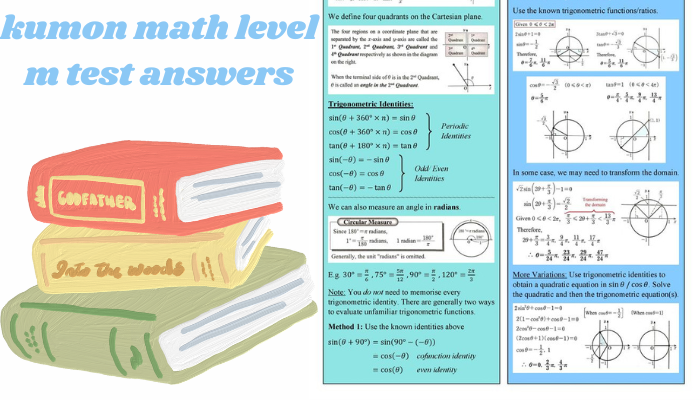

Kumon math level m test answers represents a significant milestone in the Kumon learning journey. This level typically serves students who are ready to tackle advanced algebraic concepts and more sophisticated mathematical reasoning. Parents and students often wonder what exactly awaits them at this stage, and whether they’re adequately prepared for the challenges ahead.
Understanding the structure of Level M tests is crucial for success. The tests are carefully designed to assess whether students have truly internalized the concepts presented in their worksheets. Rather than simply memorizing procedures, Kumon emphasizes understanding the “why” behind mathematical operations. This means that test questions require students to apply their knowledge in various contexts and solve problems that may appear slightly different from the practice worksheets.
The Core Topics Covered in Level M Tests
Kumon math level m test answers introduces students to several interconnected mathematical topics that form the foundation of algebra. The curriculum progresses through content in a logical sequence, building complexity as students advance through the worksheets.
Factorization is one of the primary focuses at this level. Students learn to break down numbers and expressions into their component factors, understanding how prime factorization works and why it matters in mathematics. This concept becomes essential for solving equations and simplifying expressions later on.
Systems of equations may also appear in advanced Level M work, introducing students to solving problems where multiple equations relate to one another. Additionally, introductory concepts related to quadratic expressions and polynomials begin to emerge, preparing students for Level N and beyond.
How Kumon Tests Are Structured and Administered
The structure of Kumon tests follows a consistent pattern that students become familiar with over time. Each test typically consists of 20 to 30 problems that must be completed within a specified time frame, usually between 30 to 50 minutes depending on the specific test.
Tests are administered under controlled conditions at Kumon centers. Students work independently, and instructors provide minimal guidance, mirroring actual learning conditions rather than tutoring sessions. This setup helps assess true comprehension and problem-solving ability.
Strategies for Preparing Your Child for Level M Tests
Successful preparation for Level M tests begins long before the actual test day. A comprehensive approach includes consistent practice, review of fundamental concepts, and building confidence through repetition.
Review sessions focusing on previously completed worksheets can boost confidence and reinforce concepts. Many students find that working through mixed review problems from earlier worksheets helps them recognize patterns and solidify their understanding before test day.
Creating a calm, focused study environment at home contributes to better preparation. A quiet space free from distractions allows students to concentrate fully on their work. Parents should also consider the timing of practice sessions, aiming for times when their child is most alert and receptive to learning.
Common Challenges Students Face at Level M
Level M presents new challenges for many students, and recognizing these difficulties early allows for targeted intervention. One common struggle involves transitioning from concrete arithmetic to abstract algebraic thinking. Some students find it difficult to work with variables and abstract expressions after spending years primarily working with numbers.
Fraction and decimal operations within algebraic contexts also cause difficulties. Students who struggled with fractions earlier in their Kumon journey may face renewed challenges when fractions appear alongside variables and algebraic expressions.
Addressing these challenges requires patience and sometimes additional practice beyond regular worksheets. Parents should communicate with Kumon instructors about specific problem areas so that targeted support can be provided.
Using Practice Tests to Build Test Readiness
Practice tests serve as valuable tools for building test readiness and identifying areas needing additional attention. These practice tests should closely mirror the actual test format and difficulty level to provide meaningful preparation.
After completing practice tests, review incorrect answers thoroughly. Rather than simply identifying wrong answers, work through each problem step-by-step to understand where and why errors occurred. This analysis provides invaluable insight into conceptual gaps.
Tracking performance across multiple practice tests reveals patterns. If your child consistently struggles with certain problem types, such as multi-step equations or factorization problems, this information guides focused review efforts.
What to Do If Your Child Struggles on Level M Tests
Avoid expressing frustration or disappointment about test performance, as this can undermine your child’s confidence and motivation. Instead, frame the situation as an opportunity to strengthen understanding. Many successful students have required multiple test attempts to advance.
Additional practice between test attempts should focus on the specific areas where struggles occurred. Rather than randomly working through worksheets, deliberately target problem types that caused difficulty. This focused approach builds competency more efficiently than general practice.
Motivation and Mindset for Long-Term Success
Beyond understanding specific mathematical content, cultivating the right mindset toward learning significantly impacts Level M success. Students who view challenges as opportunities for growth demonstrate greater persistence and ultimately achieve better results.
Setting realistic goals for Level M completion provides motivation without overwhelming pressure. Understanding that this level typically takes several months helps students and parents maintain patience with the process.
Celebrating progress, even when tests haven’t been passed yet, maintains motivation. Recognizing improvements in speed, accuracy, or understanding specific concepts keeps children engaged and positive about their mathematical journey.
Moving Forward After Level M
Completing Level M represents genuine mathematical progress. Students who successfully master this level possess solid algebraic foundations and are prepared for the increasing complexity of Level N and beyond.
As students transition from Level M, they should feel confident in their ability to work with algebraic expressions, solve equations, and apply mathematical reasoning to new problems. These skills transfer directly into higher mathematics and develop critical thinking abilities valuable far beyond mathematics classrooms.
Read Also: Kumon Math Level M Test Answers: A Complete Guide