
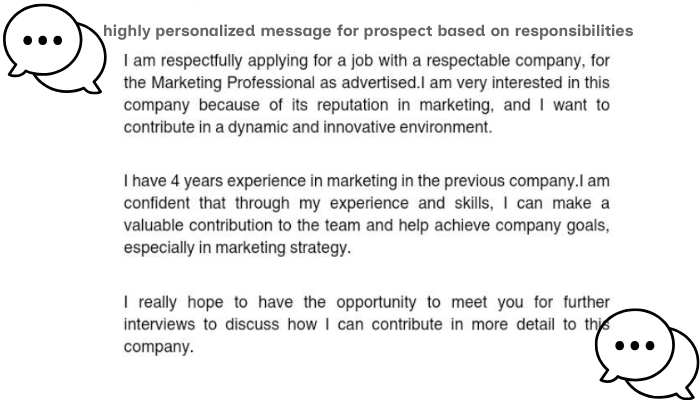

When you reach out to a prospect, generic messages get ignored. The difference between a message that lands in the trash and one that sparks a conversation often comes down to one critical factor: highly personalized message for prospect based on responsibilities.
Highly personalized message for prospect based on responsibilities. How many sales emails do you delete without reading? Probably most of them. But when someone demonstrates they understand your specific challenges, your daily frustrations, and the unique pressures of your role, you pause. You read. You might even respond.
This is the magic of responsibility-based personalization. It transforms your outreach from noise into value. Instead of talking at prospects, you’re speaking directly to their world, their problems, and their goals.
Researching Your Prospect’s Daily Responsibilities
Before writing a single word, you need to become a detective. Your mission is to understand not just what your prospect’s job title says, but what they actually do from 9 to 5.
Start with LinkedIn. Look beyond the headline. Read their posts, comments, and shared articles. What topics get them engaged? What challenges do they mention? A Chief Marketing Officer at a startup faces completely different daily battles than a CMO at an enterprise company.
Don’t overlook company review sites like Glassdoor. Current and former employees often discuss workflow challenges, tech stack limitations, and organizational pain points. This insider perspective helps you understand the operational reality behind the corporate facade.
Connecting Solutions to Specific Job Functions
Speak their language. A Chief Technology Officer thinks in terms of scalability, security, and integration. A Head of Customer Success cares about retention rates, customer satisfaction scores, and team bandwidth. Use the metrics and terminology that matter in their specific domain.
Frame your value proposition around their actual workflows. If you’re reaching out to a procurement manager, don’t just talk about cost savings. Explain how your solution streamlines vendor evaluation, reduces approval cycle time, or simplifies compliance documentation. These are the tasks filling their calendar.
The most powerful personalization addresses unspoken frustrations. Every role has those annoying, time-consuming tasks that never make it into job descriptions but consume hours each week. When you acknowledge these hidden burdens and offer relief, you demonstrate genuine understanding.
Crafting Opening Lines That Demand Attention
Your opening line determines everything. It’s the gateway to the rest of your message. Make it count by anchoring it directly to something specific about their responsibilities.
Reference a recent accomplishment related to their role. “Congratulations on rolling out the new customer portal last month” shows you’re paying attention. It’s specific, timely, and relevant to what they’ve been working on.
Avoid empty flattery. “I was impressed by your company” means nothing. “I noticed your team reduced customer churn by 15% last quarter using a community-driven approach” shows you’ve done your homework and understand what matters in their role.
Structuring Your Message Around Their Priorities
Highly personalized message for prospect based on responsibilities. Busy professionals skim before they read. Your message needs to work on multiple levels.
Start with the hook. Your opening should connect to their specific responsibility and create immediate relevance. This isn’t about you yet. It’s entirely about them and their world.
Include proof relevant to their role. A case study featuring someone with identical responsibilities carries infinitely more weight than generic testimonials. “Sarah Chen, Head of Customer Success at TechFlow, reduced her team’s manual reporting time by 18 hours per week” speaks directly to similar role holders.
End with a low-friction next step. Make it easy and responsibility-appropriate. For senior executives, offer to send a brief summary. For managers, suggest a 15-minute conversation. For individual contributors, perhaps share a relevant resource first.
Avoiding Common Personalization Mistakes
Even well-intentioned personalization can backfire. Watch out for these traps that undermine your credibility.
Surface-level details fool no one. Mentioning their company name or that you both attended the same university doesn’t constitute real personalization. It’s table stakes. Go deeper into responsibilities or don’t bother.
Incorrect assumptions damage trust instantly. If you’re not absolutely certain about their specific responsibilities, use softening language. “I imagine you’re likely involved in vendor selection” works better than confidently asserting something that’s wrong.
Ignoring context reveals laziness. A prospect who just posted about being overwhelmed doesn’t want a message about adding another meeting to their calendar. Timing and situational awareness matter enormously.
Scaling Personalization Without Losing Authenticity
You can’t spend three hours researching every prospect. The art lies in creating systems that enable responsibility-based personalization at scale.
Build responsibility profiles for common roles. Document the typical challenges, priorities, metrics, and daily tasks for positions you frequently target. This becomes your foundation for faster, informed personalization.
Develop tiered personalization strategies. Your highest-value prospects deserve deep, comprehensive personalization. Mid-tier prospects get solid responsibility-based customization. Lower-tier prospects might receive well-segmented messages based on role categories.
Quality beats quantity every time. Ten highly personalized messages to prospects whose responsibilities you truly understand will outperform a hundred generic emails. Focus your energy where understanding runs deep.
Measuring and Refining Your Approach
Personalization isn’t a one-time tactic. It’s a skill you develop through practice, measurement, and refinement.
Track response rates by responsibility level. Are messages to certain roles performing better? This reveals where your understanding is strongest and where you need deeper research.
Test different approaches systematically. Try leading with challenges versus opportunities. Experiment with question-based versus statement-based openings. Data reveals what works for different responsibility levels.
Keep learning about evolving roles. Job responsibilities shift as industries change. Stay current with how roles are transforming so your personalization remains relevant and accurate.
Turning Personalized Messages Into Lasting Relationships
The ultimate goal isn’t just getting a response. It’s building relationships where your understanding of their responsibilities creates ongoing value.
When prospects respond, deepen your knowledge. Use initial conversations to refine your understanding of their specific situation. Every interaction should enhance your grasp of their daily reality.
Read Also: Highly Personalized Message for Prospect Based on Responsibilities